Self-Healing Infrastructure Tools and Architecture: What to Look For
Zak
8th August 2026
Vendors sell "self-healing" as a feature checkbox. In practice, it's an architecture spanning three distinct layers, observability, decision-making, and action, and most tools are genuinely strong in one of those layers and weak in the others. Picking well means understanding which layer a given tool actually covers, not taking the marketing at face value.
Layer 1: Observability and Telemetry
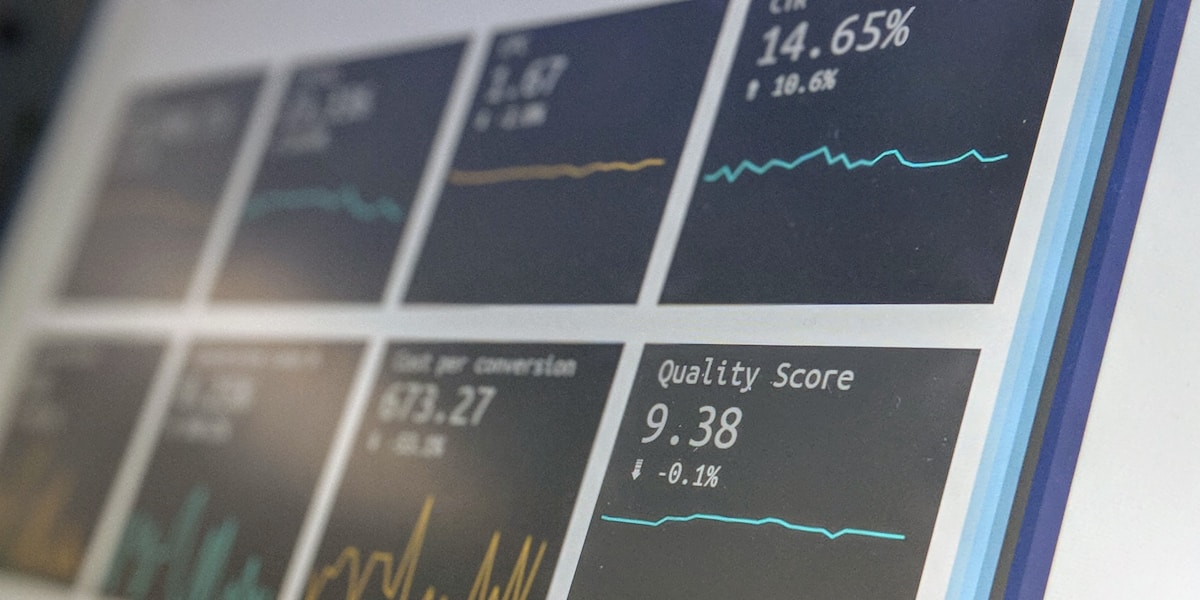
This is the foundation every other layer depends on, the tools that ingest metrics, logs, traces, and events into a queryable store. Evaluating this layer means checking for dynamic baselines that learn typical performance patterns rather than static thresholds, and unified data ingestion so an investigation doesn't require correlating four separate tools by hand.
Get this layer wrong and nothing built on top of it works reliably, a self-healing system is only as good as its ability to sense what's actually happening.
Layer 2: Correlation and Decision-Making
This is where raw telemetry becomes an actionable diagnosis. The strongest platforms automatically group related alerts into a single incident based on time, topology, and service relationships, rather than forwarding every raw signal as a separate ticket. Different vendors take genuinely different approaches here:
Causal AI platforms (like Dynatrace's Davis engine) link issues to service dependency data to identify root cause with an explainable chain of reasoning, valuable in regulated environments where "the AI said so" isn't an acceptable audit answer.
Incident orchestration platforms (like PagerDuty) focus less on root-cause analysis and more on routing the right alert to the right person fast, a better fit when the bottleneck is team coordination rather than diagnosis quality.
Platform-embedded AIOps (like ServiceNow's) ties operational data directly to ITSM records and CMDB, which suits organisations already standardised on that platform's workflows.
None of these are wrong choices, they solve different bottlenecks. The mistake is buying one because of its marketing category without checking whether it addresses the specific bottleneck your team actually has.

Layer 3: Automated Action
This is the layer that separates genuine self-healing from sophisticated monitoring. The architecture pattern that works reliably in production combines:
Workflow automation defined as code, remediation steps as version-controlled, testable definitions rather than manual runbooks, so what actually executes is auditable and repeatable.
Tool-bounded AI agents, where generative AI assists with diagnosis and drafting a remediation plan, but is restricted to a specific, pre-approved set of tools and actions rather than open-ended system access. This is a deliberate constraint that prevents a plausible-sounding but wrong AI decision from having unlimited blast radius.
SLO-based triggering, burn-rate monitoring against error budgets, rather than static thresholds, deciding when automated action is warranted.
Evaluation Checklist
Does it correlate, or just forward? A tool that turns every alert into a ticket 1:1 isn't doing the decision-making layer's job, regardless of what the AIOps label implies.
Can you see exactly what an automated action will do before it runs, and audit it after? If remediation logic is a black box, you can't safely expand its scope over time.
Does it support bounded, tool-restricted automation? Open-ended system access for an AI agent is a governance problem waiting to happen. Look for platforms that explicitly constrain what an agent can execute.
Is rollback a first-class feature or an afterthought? Ask specifically, in a demo, to see an automated action get reversed. If the vendor can't show this cleanly, treat that as a real gap.
Does it integrate with what you already have, or require ripping out your existing observability stack? Most organisations get further layering decision-making and action on top of observability they've already invested in, rather than starting over.
Build vs Buy vs Layer
Very few organisations build all three layers themselves. The realistic options are typically buying a single vendor's integrated stack across all three layers, or, more commonly, keeping the observability tooling already in place and layering a dedicated AIOps and remediation platform on top of it. The second path is usually lower-risk: it preserves the telemetry integrations your team has already built and tuned, and adds the decision-and-action layer that a pure observability tool was never designed to provide.
Where Conxiea Fits
Conxiea's AI-driven InfraOps platform is built specifically for the decision-and-action layer of this architecture, sitting on top of your existing network visibility, correlating events, and executing bounded, auditable, reversible remediation, without requiring you to replace the observability stack you already run.
Book a free demo to see how it fits your existing tools →